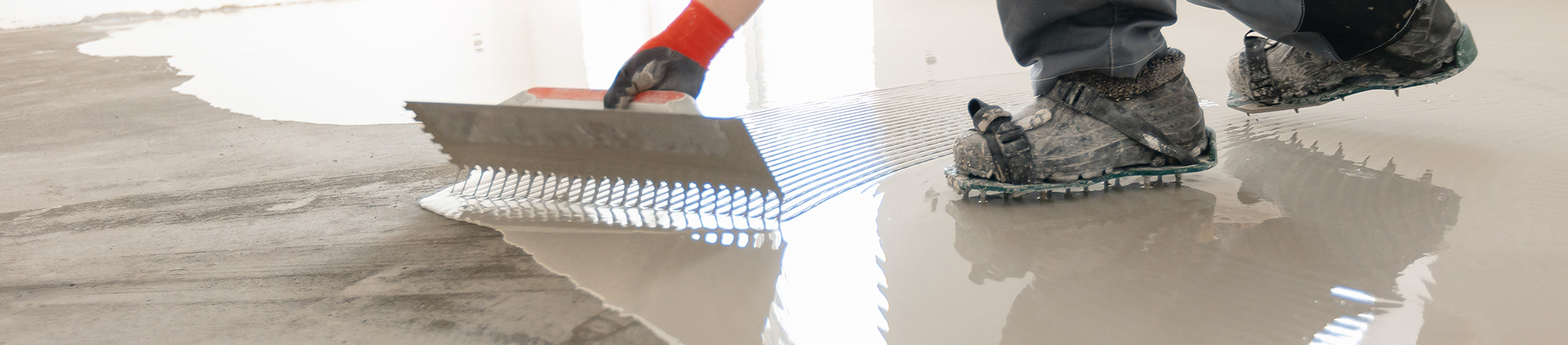
Self-Levelling Screed

What is Self-Levelling Screed?
Self-levelling screeds are used to create smooth, level surfaces before installing floor coverings like tiles, vinyl, or carpets. They come in different types, each suited for specific applications. Here’s an overview:
Water-Based (Cementitious) Self-Levelling Screeds
- Composition: Cement-based with added polymers and additives.
- Pros: Fast-setting, good adhesion, works well with underfloor heating.
- Cons: Can shrink and crack if applied too thickly or improperly mixed.
What is Self Levelling Screed Best For?
- Prepare interior flooring before tiling, vinyl, or carpet.
- Use over concrete, sand/cement screeds, or existing tiles.
- Residential and commercial projects.

Latex (Polymer-Modified) Self-Levelling Screeds
- Composition: Cement-based but mixed with a latex additive for flexibility.
- Wood, metal, and flexible surfaces (e.g., plywood or chipboard).
- Areas with minor movement or vibration.
- Thin applications (2–10mm).
- Pros: Flexible, reduces cracking, and has good bonding properties.
- Cons: More expensive than standard cementitious screeds.
Best for:

Get in touch for
Expert flooring solutions

Calcium Sulphate (Anhydrite) Self-Levelling Screeds
- Composition: Gypsum-based rather than cement-based.
- Large commercial and industrial projects.
- Underfloor heating systems (excellent thermal conductivity).
- Areas requiring a smooth, crack-free finish.
-
Pros: It can be laid in thicker layers (up to 50mm), has minimal
shrinkage, and has good flow properties. -
Cons: Longer drying time, not compatible with cement-based
adhesives without priming.
Best for:

Fast-Drying (Rapid-Set) Self-Levelling Screeds
- Composition: Cement-based with rapid-setting additives.
- Tight project timelines (set within a few hours).
- Commercial environments need a quick turnaround.
- Repairs and renovations.
- Pros: Fast drying, walkable within hours, reduces downtime.
- Cons: More expensive, requires precise mixing and application.
Best for:
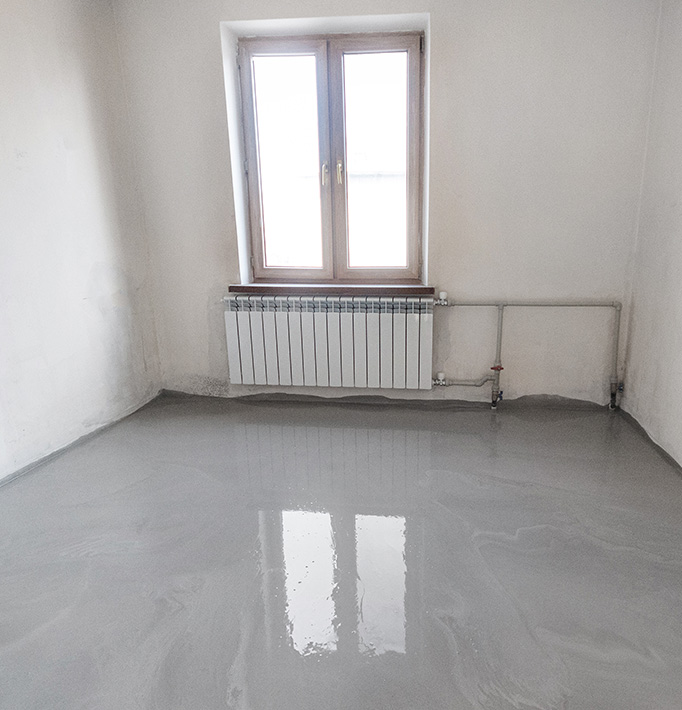
Industrial/Heavy-Duty Self-Levelling Screeds
- Composition: High-performance cement with added resins or epoxy.
- Warehouses, factories, and heavy foot traffic areas.
- Forklift and machinery use.
- Areas exposed to chemicals or moisture.
- Pros: Highly durable, impact-resistant, and can handle heavy loads.
- Cons: Expensive, specialist application required.
Best for:
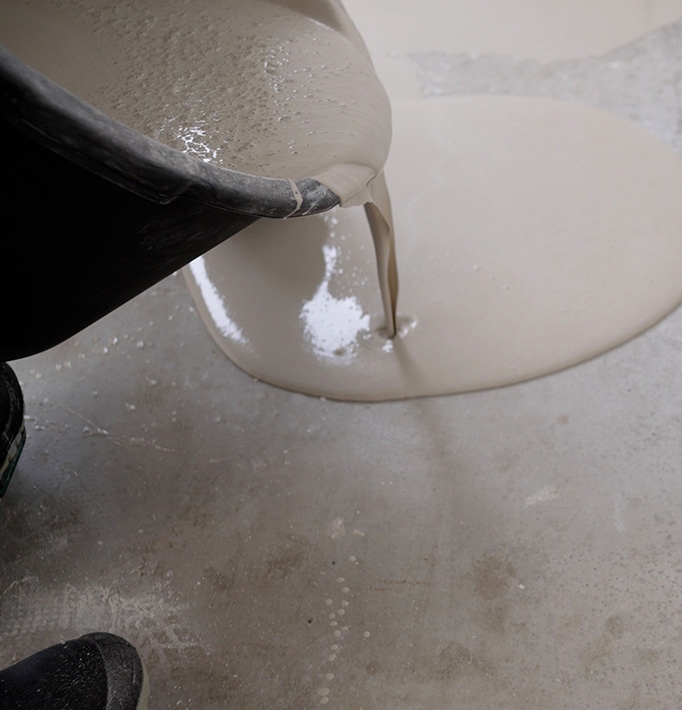
Fibre-reinforced self-levelling Screeds
- Composition: Cementitious screed with added fibres for strength.
- Reducing cracking in larger areas.
- Use over underfloor heating.
- Areas with structural movement.
-
Pros: Reinforced for strength, minimizes cracking and improves
longevity. - Cons: Can be more challenging to work with due to fibre content.
Best for:
Each type of self-levelling screed has its strengths and is chosen based on the
project’s requirements. Do you need advice on a specific job? Get in touch to
discuss your options.

